Hugo Schulz · 3 October 2026
Dewlyn Mycologists Track Underground Fungal Connections Boosting Local Tree Resilience
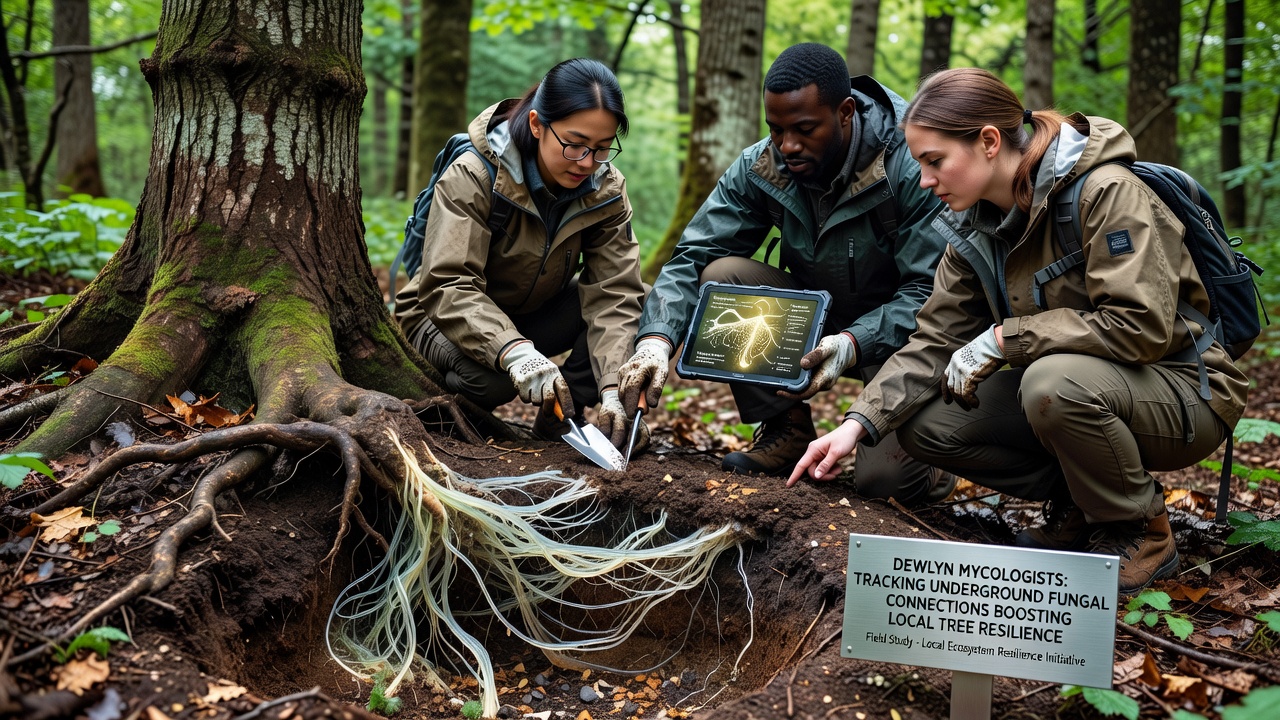
Teams of mycologists in Dewlyn have spent recent months mapping extensive underground fungal networks that connect local tree species and support their resistance to environmental stresses, with key data collected through October 2026 showing measurable improvements in tree health across monitored sites. These networks, known as mycorrhizal associations, link tree roots to soil fungi that exchange nutrients and water in return for carbohydrates produced through photosynthesis.
Mapping the Hidden Networks
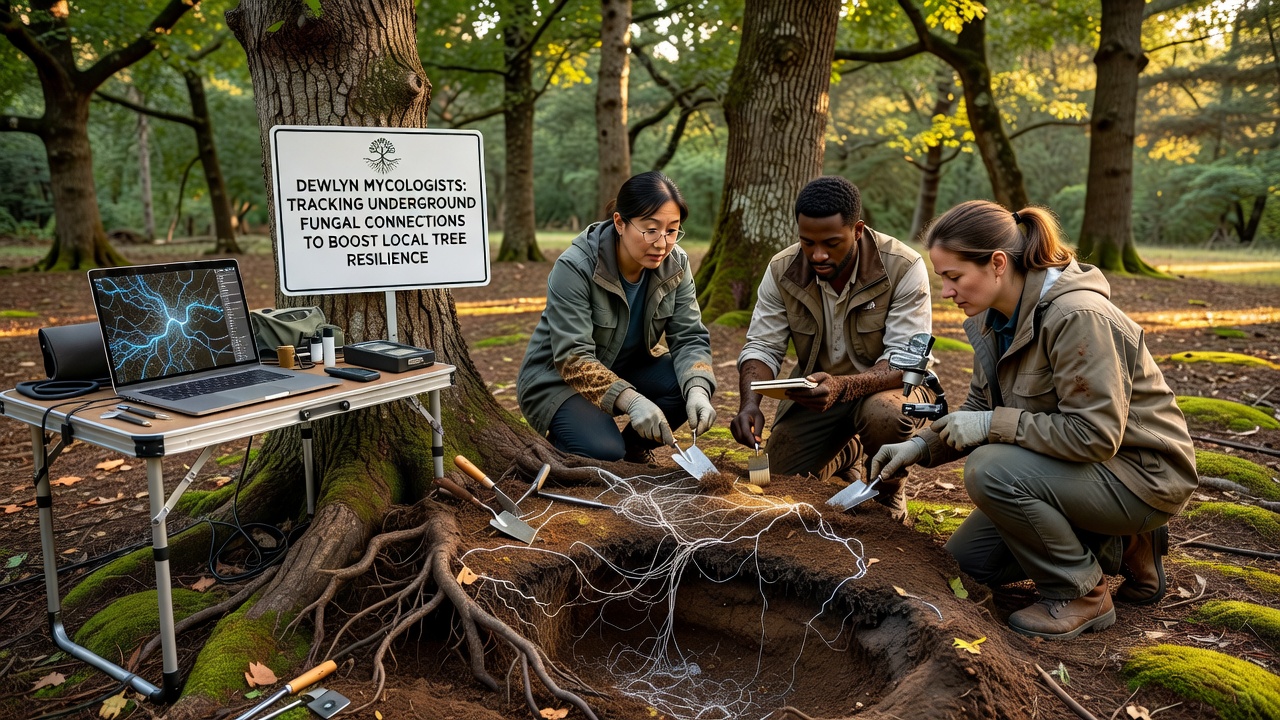
Researchers began systematic surveys in early 2026 using soil core sampling combined with DNA sequencing to identify fungal species present in root zones, and the resulting maps revealed dense webs stretching between oak, beech, and pine stands throughout the region. Data from these efforts indicate that certain fungal strains appear more frequently in areas where trees demonstrate faster recovery after drought periods, according to records maintained by the Dewlyn environmental monitoring program.
Equipment deployed in the field includes portable spectrometers that measure nutrient transfer rates along fungal hyphae, and observations collected during October 2026 confirmed higher phosphorus movement in connected versus isolated trees. One field station reported consistent readings across multiple transects, highlighting how these connections function even in compacted soils near village edges.
Resilience Benefits Documented
Evidence gathered so far points to enhanced drought tolerance and pathogen resistance in trees linked through fungal pathways, with growth ring measurements from sample plots showing steadier annual increments compared to disconnected specimens. Local forestry records note fewer instances of bark beetle damage in networked zones, a pattern that aligns with findings from broader studies on forest symbioses.
Scientists tracking these systems have also noted seasonal shifts, such as increased fungal activity during wetter autumn months that prepares trees for winter dormancy, and the October 2026 samples captured elevated enzyme levels associated with nutrient cycling. This timing coincides with leaf drop, when stored resources move downward through roots and into the fungal partners.
Methods and Tools in Use
Field crews employ a combination of traditional excavation techniques and modern imaging technology to trace hyphal pathways without disturbing the soil structure excessively, while drone surveys provide overhead context for surface vegetation patterns that correlate with underground activity. Genetic analysis performed at a regional laboratory identifies specific fungal taxa, allowing comparison against databases maintained by international research networks.
Collaboration with soil scientists has refined sampling protocols, ensuring consistent depth measurements and moisture readings that feed into models predicting network expansion under changing climate conditions. These models draw on long-term datasets from similar temperate forests, including work coordinated through institutions such as Natural Resources Canada that examine comparable symbioses in boreal stands.
Broader Ecosystem Implications
Local wildlife patterns appear influenced by the health of these fungal-supported trees, as increased canopy density provides better habitat for nesting birds and improved leaf litter supports soil invertebrates. Monitoring stations established near protected woodlands have logged higher biodiversity indices in areas with strong mycorrhizal presence, based on camera trap and acoustic sensor outputs collected through late 2026.
Restoration projects underway in previously cleared sections of Dewlyn woodlands now incorporate fungal inoculation techniques derived from the mapping work, and early results suggest quicker establishment of native saplings when compatible fungal partners are introduced alongside them. Such approaches mirror strategies tested in other regions, including research coordinated by CSIRO in Australia on eucalypt systems.
Conclusion
Continued tracking through the coming seasons will clarify how these underground connections respond to temperature fluctuations and land use changes around Dewlyn, while the datasets assembled so far already contribute to refined management guidelines for maintaining forest stability. Observers note that integrating fungal considerations into standard forestry practices represents a shift toward more holistic ecosystem approaches that recognize belowground processes as central to aboveground outcomes.